Building a Wedding Marketplace from Idea to Launch
Project Summary
★ Virgin StartUp Funded
★ 20+ Paying Suppliers in Month One
★ 100+ Customer Enquiries in Month One
★ 4 Connected Platforms
Role:
Founder, Product Designer & Front-end Developer
Industry:
SaaS / Marketplace / Wedding
Responsibilities:
Product Strategy, UX, UI Design, Front-end Development, Product Specification
Platforms:
iOS, Android, Web & Supplier Dashboard
Focus:
Supplier Discovery, Enquiries, Marketplace UX, Multi-platform Product Design
MyShaadi was a business and SaaS marketplace I created to make it easier for couples planning a South Asian wedding to find, compare and contact trusted suppliers.
What started as an idea developed into a complete multi-platform product, including a customer-facing mobile app, supplier dashboard, website, administration platform and online directory. I led the product from initial concept through to design, front-end development, developer handover and launch.
Overview
The idea for MyShaadi came from conversations with friends working in the wedding industry. Many were looking for ways to grow their businesses but felt that existing wedding platforms didn’t really cater for the UK South Asian market.
At the same time, planning a wedding could be a frustrating experience for couples. Finding suppliers meant searching across multiple websites and social platforms, contacting businesses individually and receiving quotes that were often difficult to compare.
I saw an opportunity to improve the experience for both sides of the marketplace.
The Challenge
MyShaadi needed to solve two very different problems.
For suppliers, particularly newer businesses, the challenge was visibility. They needed an affordable way to showcase their work, promote services and connect with couples actively looking for what they offered.
For couples, the process of finding and comparing suppliers was often unnecessarily complicated. Every business presented its services differently and enquiries had to be sent individually, making it difficult to compare like-for-like quotes.
The challenge was to bring both sides together in one simple experience, while reducing the amount of work required to go from searching for a supplier to receiving useful responses.
Key Challenges
- Two different user journeys
The platform needed to work equally well for couples planning weddings and suppliers running their businesses. - Simplifying a complicated process
Finding, researching, contacting and comparing wedding suppliers could take hours. I wanted to make that journey much quicker. - Building across multiple platforms
The product included mobile apps, a customer website, supplier dashboard and internal administration tools, all of which needed to feel like parts of the same product. - Turning an idea into something developers could build
Because everything was being created from scratch, the product needed clearly defined journeys, functionality and specifications before development began.
My Approach
I started by looking at the wedding planning process from both sides.
For couples, I mapped the journey from discovering a supplier through to viewing their work, checking reviews, sending an enquiry and eventually having a conversation.
For suppliers, the experience needed to make managing their presence on MyShaadi simple. They needed to be able to create a profile, upload their work, manage services and offers, receive enquiries and communicate with potential customers.
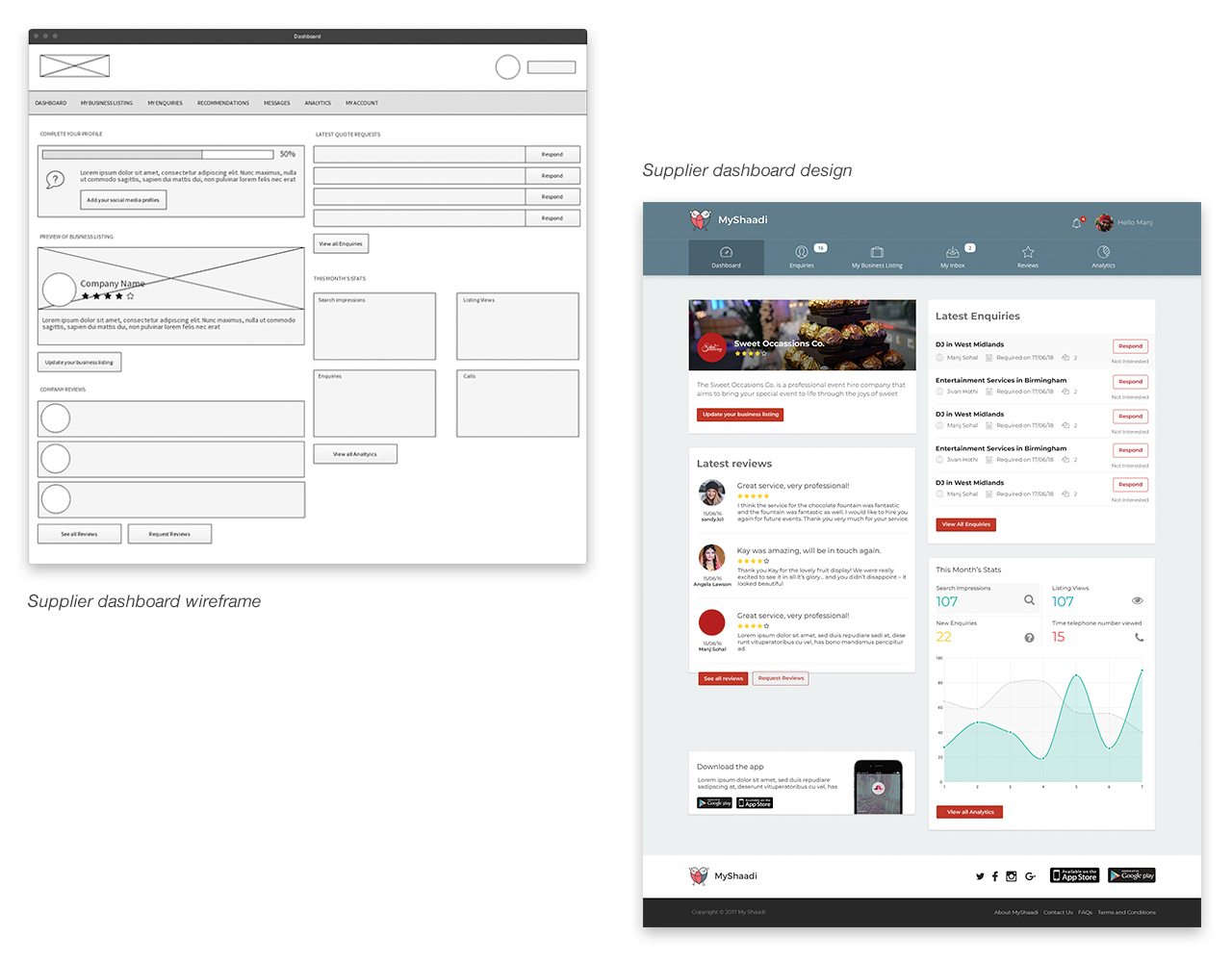
Rather than treating these as separate products, I designed them as two connected sides of the same marketplace.
I created the user journeys, wireframes and interface designs before coding the complete front end using HTML, CSS, JavaScript and jQuery. I built the interfaces using dummy data so that the experience and functionality could be tested before handing everything over to the development team.
I also produced a detailed product specification covering the journeys, functionality and expected behaviour, which became the reference point for the developers building the Laravel backend and native mobile applications.
I continued working closely with them throughout development, adapting the front end where technical constraints or mobile platform requirements meant the original approach needed to change.
The Solution
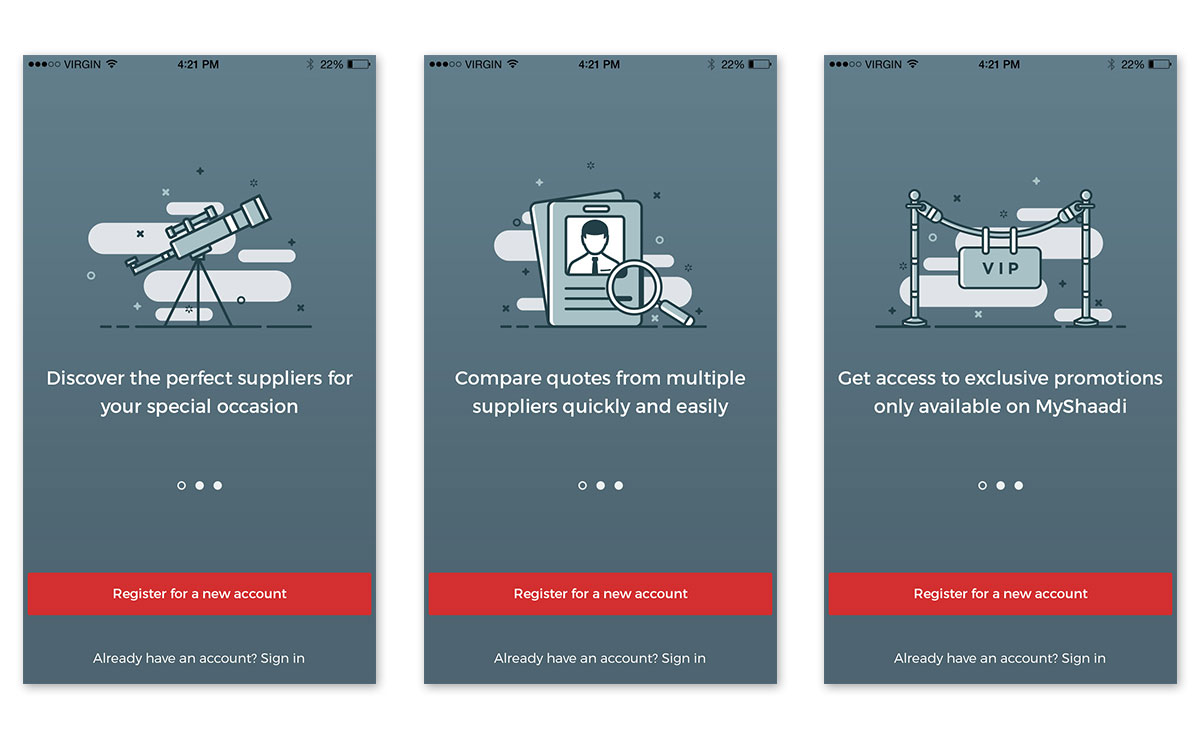
Making supplier discovery easier
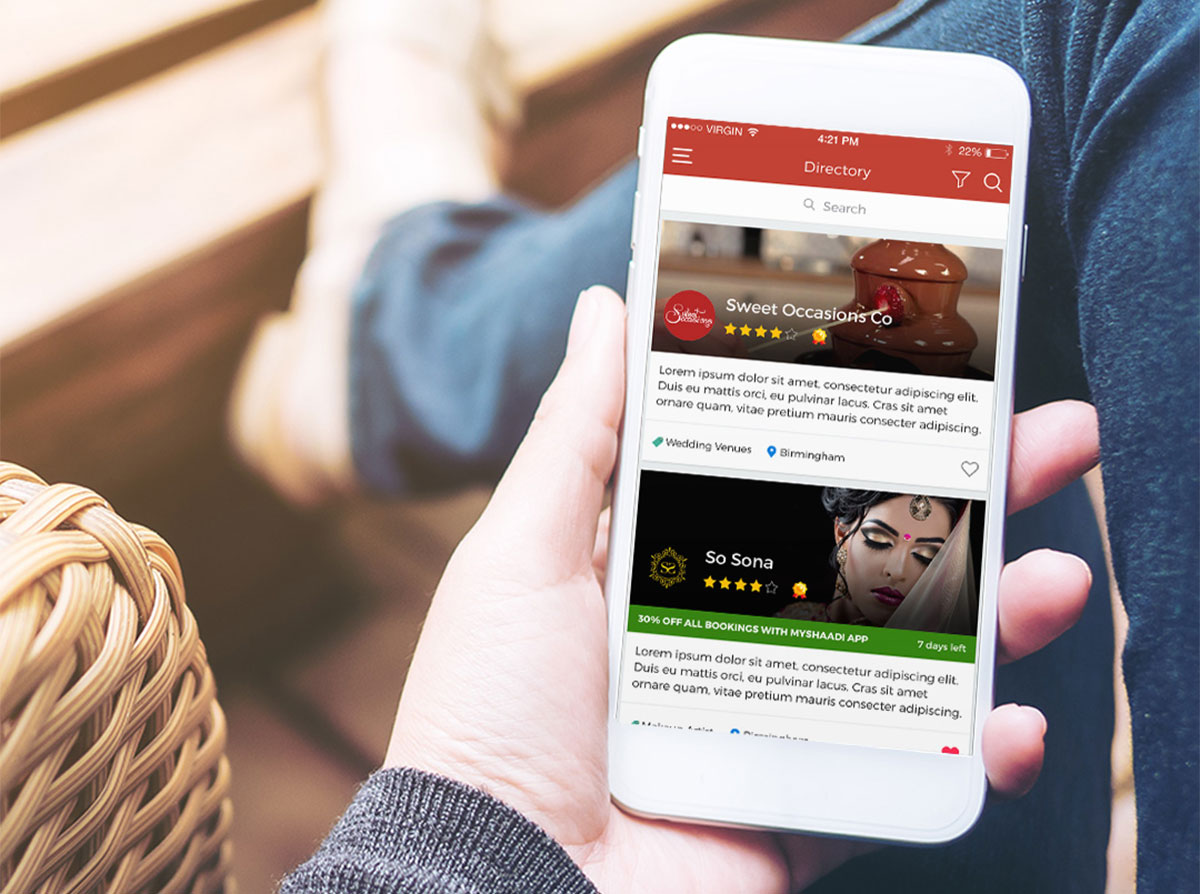
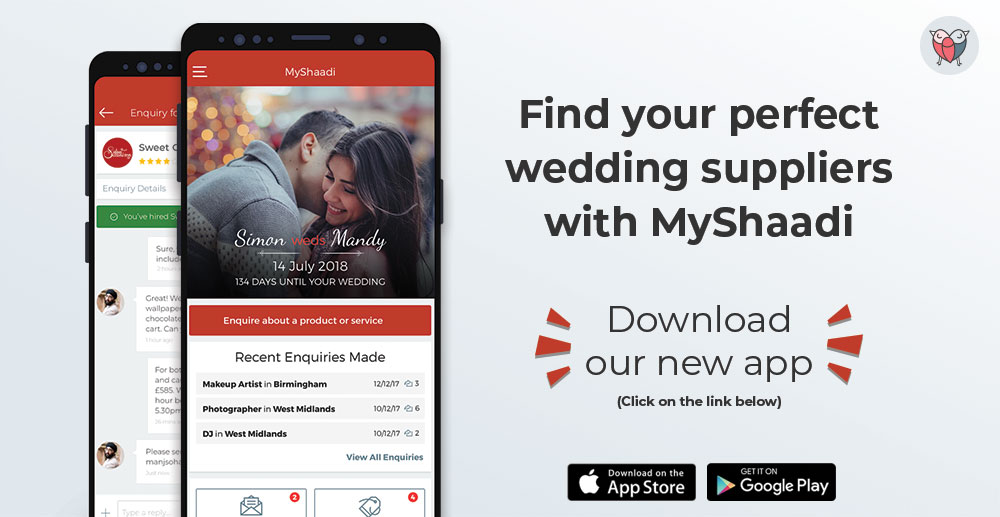
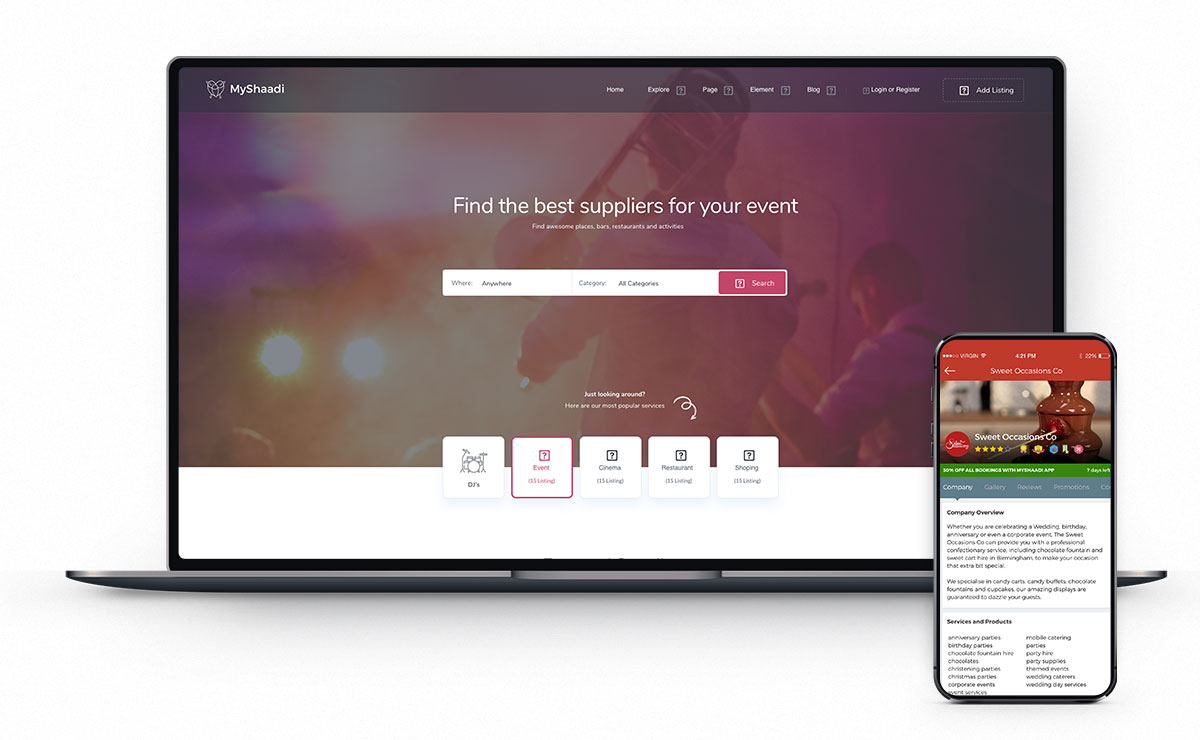
The customer app brought suppliers from across the South Asian wedding industry into one searchable directory.
Couples could browse businesses, view images and services, read reviews and discover exclusive offers without having to search across multiple websites and social media accounts.
One enquiry, multiple suppliers
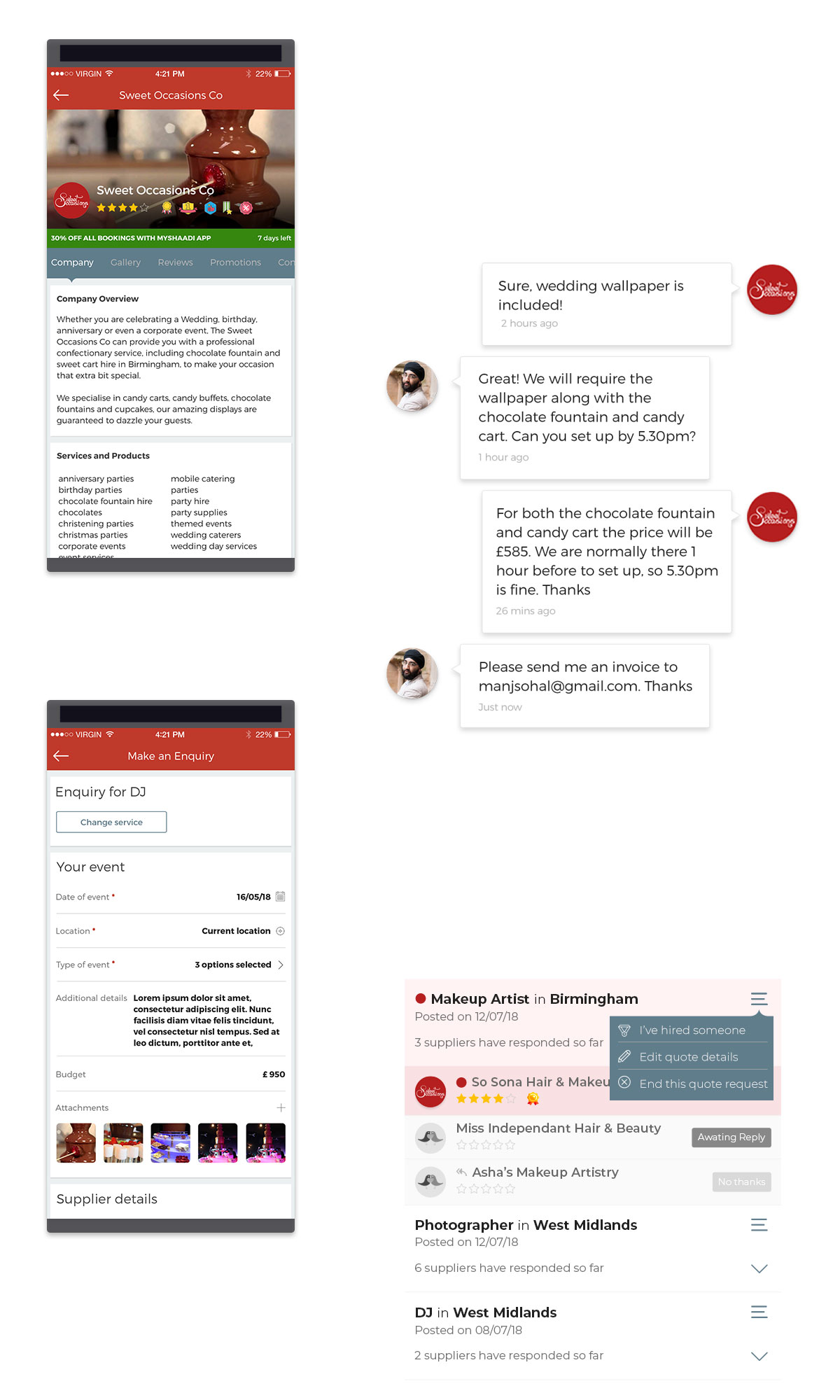
One of the most important features was the enquiry system.
Instead of contacting businesses individually, customers could submit a single structured enquiry describing exactly what they needed. The enquiry would then be distributed to relevant suppliers within that category.
This made the process much quicker for customers while also giving suppliers access to genuine leads.
Importantly, suppliers received the same core information, making the responses much easier for couples to compare.
Giving suppliers their own business tools
The supplier dashboard gave businesses control over their presence on the platform.
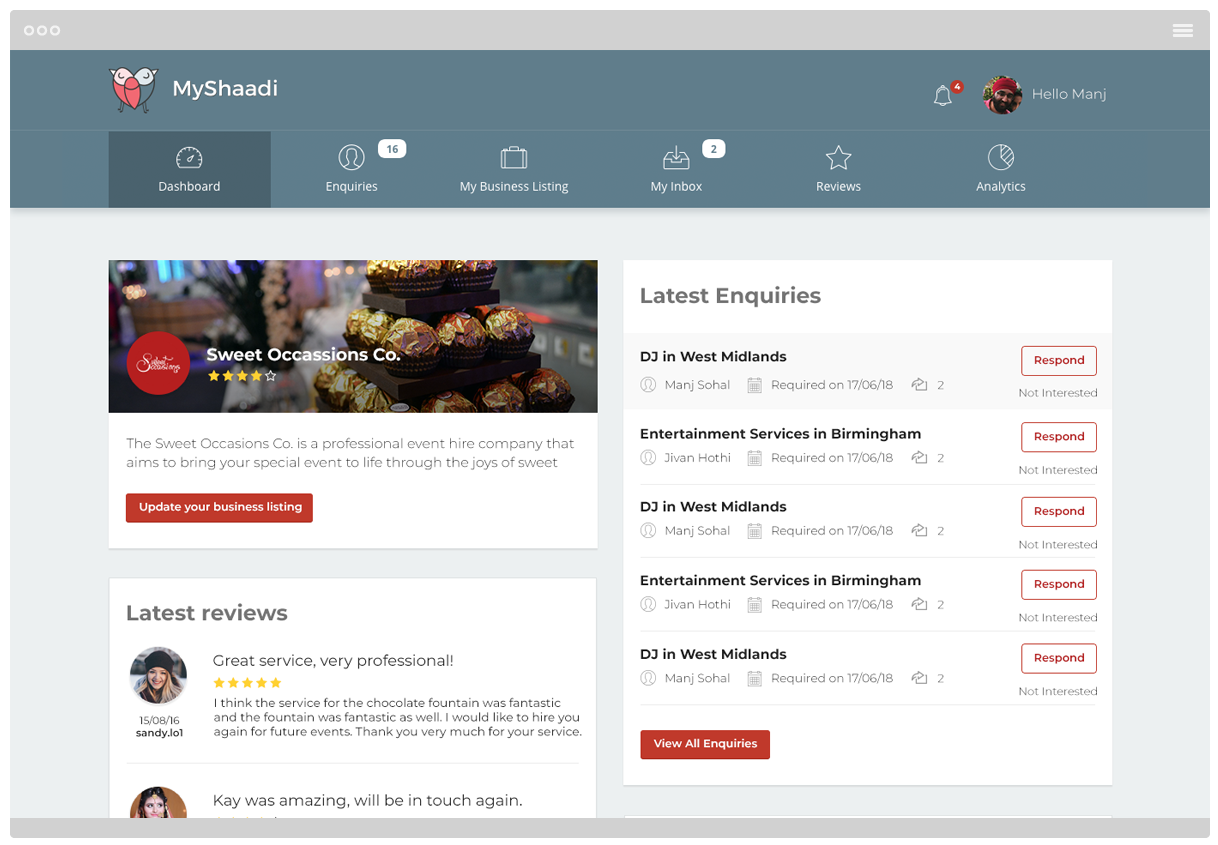
Suppliers could:
- Create and manage their profile
- Upload images and services
- Publish offers and discounts
- Receive and respond to enquiries
- Message potential customers
- Manage platform subscriptions
- Purchase enquiry credits
- Earn badges for completing milestones
The aim was to make MyShaadi useful not only as a directory, but as a tool suppliers could actively use to generate and manage new business.
Building a connected ecosystem
As the product developed, MyShaadi expanded beyond the original mobile app into a wider ecosystem consisting of the customer website, supplier dashboard, internal administration platform and later an online supplier directory.
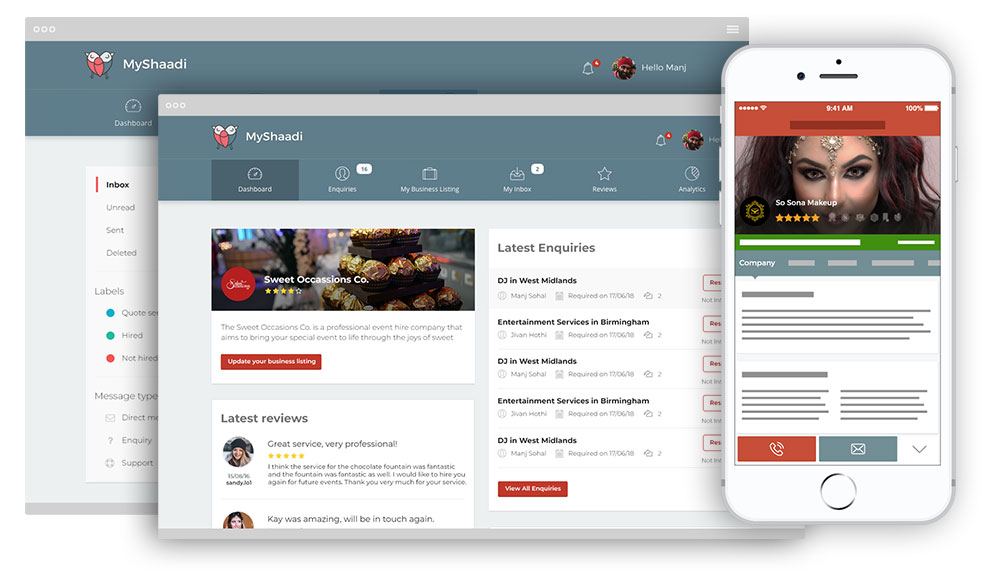
Although each platform served a different purpose, I designed them around the same core experience and visual language.
From Product Idea to Business
My involvement went well beyond designing and developing the product.
I created the business model and business plan for MyShaadi, including how the platform would attract customers, generate revenue and grow its supplier base.
I then presented the business to a panel as part of an application for funding through Virgin StartUp. The application was successful and MyShaadi received funding to help bring the product to market.
For me, this was an important part of the project. It meant being able to explain not only how the product worked, but why there was a market for it and how it could become a viable business.
The Outcome
MyShaadi launched as a real product rather than remaining a prototype or concept.
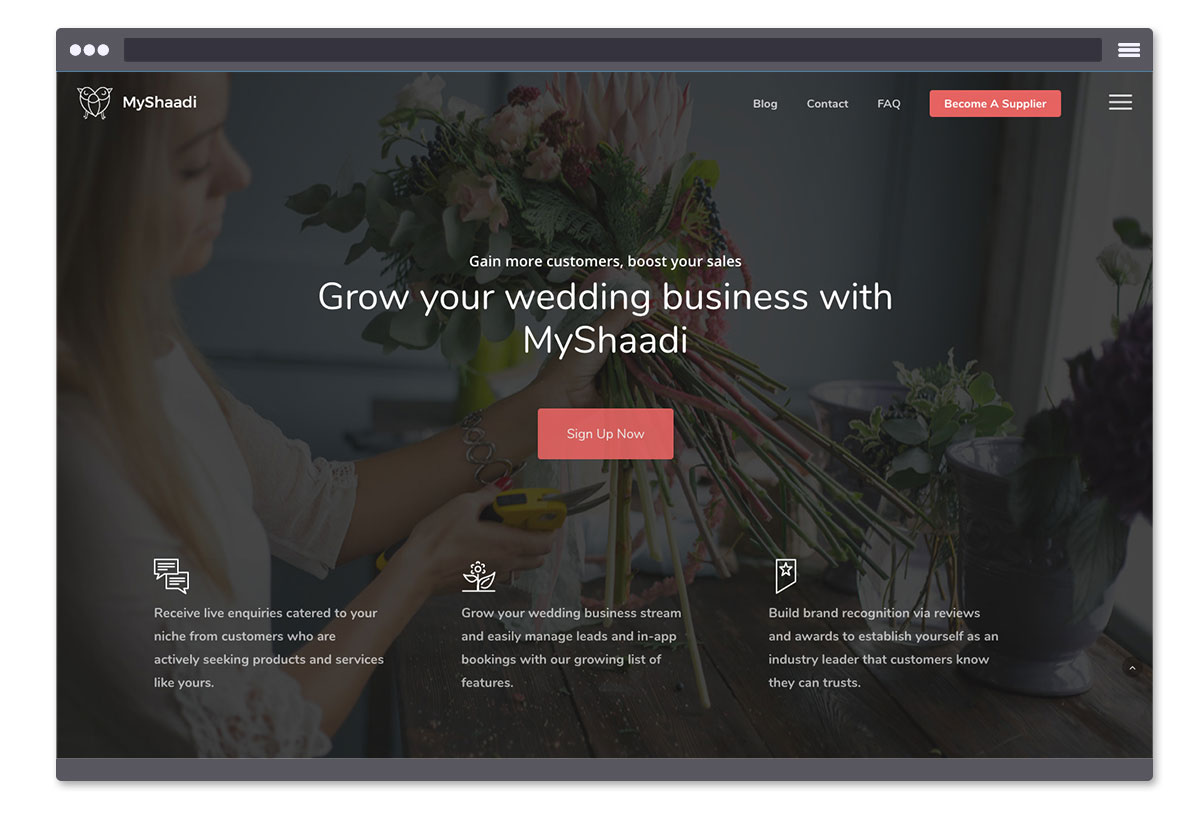
I marketed the platform through social media and began onboarding suppliers from the UK wedding industry.
Within the first month:
- 20+ paying suppliers registered and actively created profiles, uploaded services and used the platform.
- 100+ customer enquiries were submitted by real users looking for wedding suppliers.
Seeing people actually use something I’d taken from an initial idea through to a working platform was one of the most rewarding parts of the project.
More importantly, it validated the original problem. Suppliers wanted a better way to reach customers, and couples were willing to use a simpler way of finding and contacting them.
What I’m Most Proud Of
MyShaadi remains one of the projects I’m most proud of because I was involved in every stage.
I identified the opportunity, shaped the business model, designed the user experience, created the UI, built the front end, wrote the product specification, worked alongside the development team, secured startup funding and helped bring the product to market.
It taught me a huge amount about what happens beyond the design itself. Building a successful product means understanding users, technology, marketing and the commercial realities of turning an idea into something people are willing to use.
That experience continues to influence the way I approach product design today.